Teach Safety Skills: Safety Activities & Worksheets for Teens
Apr 03, 2023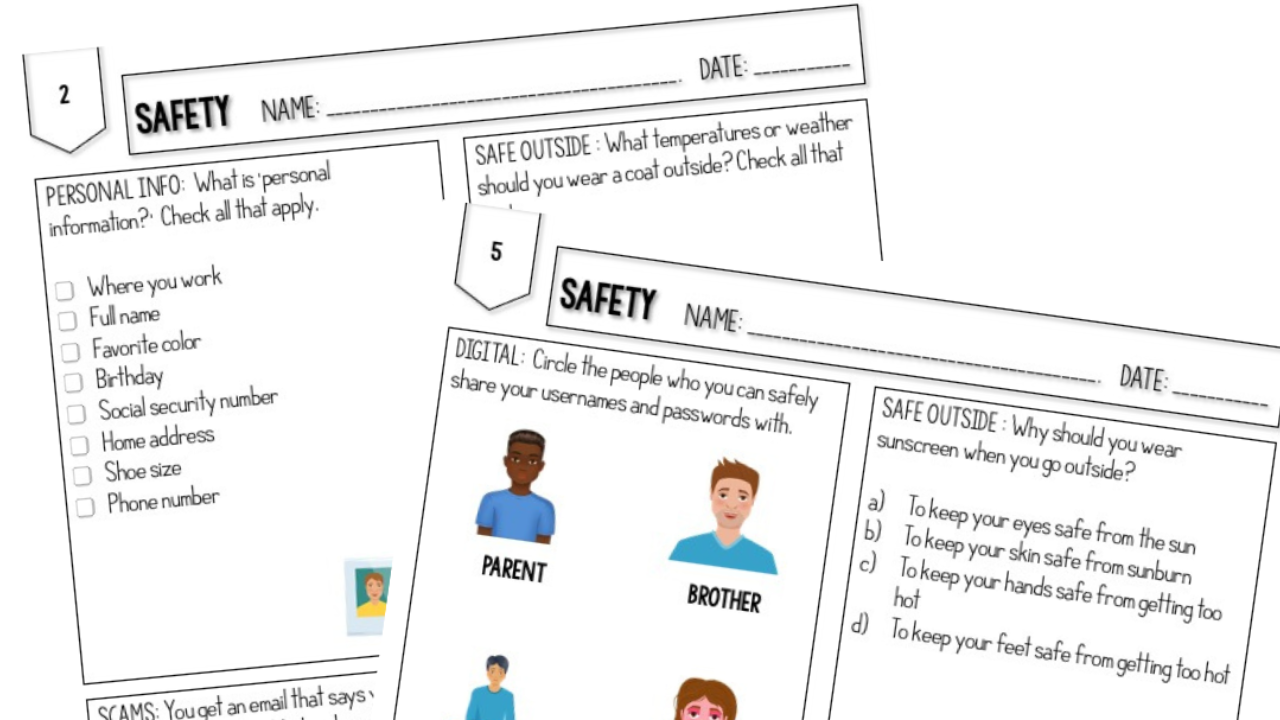
When you think of safety skills you probably think of teaching students to wear oven mitts when using the oven, to not share their personal information with strangers, and to lock the door when they are home alone.
You likely embed safety skills into specific lessons (such as kitchen safety and independent living) when applicable. You probably also give verbal reminders in real time, like looking both ways before crossing the street while out in the community on a trip.
If you are seeking ways to review faaaaarrrrr more safety skills on a regular basis, then this Safety Skills Worksheet Workbook is perfect for your classroom! Want to try before you buy? Grab 1 page of the Safety Skills Weekly Worksheet Workbook for FREE!
What Are Safety Skills?
Safety skills are situations students learn to avoid or navigate to reduce risk to themselves/or their bodies, or others. While most people think of safety skills as knowing how to use sharp objects appropriately in the kitchen, it stretches far beyond that. Safety rules apply to life at home, in the community, in relationships, and online.
Examples of Safety Hazards
If you want to increase the safe behavior skills you address in the classroom or community settings, check out the list of different safety skill examples below:
Fire safety examples include blowing out a candle and turning off a space heater when leaving the house, not putting aluminum foil or silverware in the microwave, and keeping paper and boxes away from the flame on a stovetop.
Road/Sidewalk safety examples include crossing only at crosswalks when the sign indicates it is safe to cross, checking that drivers behind the wheel see you before crossing the street, and using the handrails or walking slowly when crossing ice.
Medicine safety examples include reading the directions (and confirming with someone else) before taking any over-the-counter medication, not to take medicine that isn't yours, and not to take medical advice from people on social media.
Community safety examples include sharing personal information with a police officers, paramedics, or firefighters who are there to offer help, confirming the make, model, and license plate of a rideshare car before entering, and keeping one's body covered when in a public locker room.
Home safety examples include associating a beeping sound with a smoke or CO2 detector and what to do next, knowing what to take with you when you leave your home, and only buzzing in people you know into your apartment building.
Food safety examples include checking expiration dates and mold before eating any food, checking the menu or confirming with restaurant staff (cashier/waiter) regarding food allergies before eating, and storing food in the environment identified on the packaging (i.e., keep refrigerated, refrigerate upon opening, or keep frozen).
Digital safety examples include using a digital passcode or FaceID to keep the phone safe from others, stranger danger applies to individuals who communicate with you via email, DM, and social media, and knowing the acronym NSFW means it's very inappropriate.
Water safety examples include awareness that water poured from a pot that was boiling will be VERY hot!, floors are slippery when wet, and to use your hand to test the water temperature of a shower before getting in.
Why Teach Safety Skills?
Having worked closely with families as their loved ones neared the end of their time receiving special education services, I heard time and time again how parents and caregivers worried about the personal safety of their loved ones. So, it's a skill of great importance.
There are school-wide safety lessons, like a building-wide fire drill, and opportunities to practice safe choices when students with food allergies ordering at a restaurant; however, there is potential for unsafe situations throughout a young adult's daily life.
The first part is teaching an AWARENESS of danger and dangerous situations. THEN, students will be able to anticipate potential dangers of different situations and make a safe choice.
Since there are potential hazards in a variety of environments, like home, community, and workplace, safety is a skill best addressed proactively (instead of reactively), when possible.
Why the Safety Skills Worksheet Workbook Is Awesome
Besides covering a wide range of important safety skills, let me tell you what other awesomeness this resource includes.
> It’s important for me to have resources that are age appropriate for young people in terms of graphics, font, and colors with a clean design and age-relevant questions. This resource is no different. It was created with a more mature student in mind (i.e. high school and transition age). Students deserve better than oddly-shaped cartoon people.
> Vocabulary is simple, which is ideal for your lower-level readers.
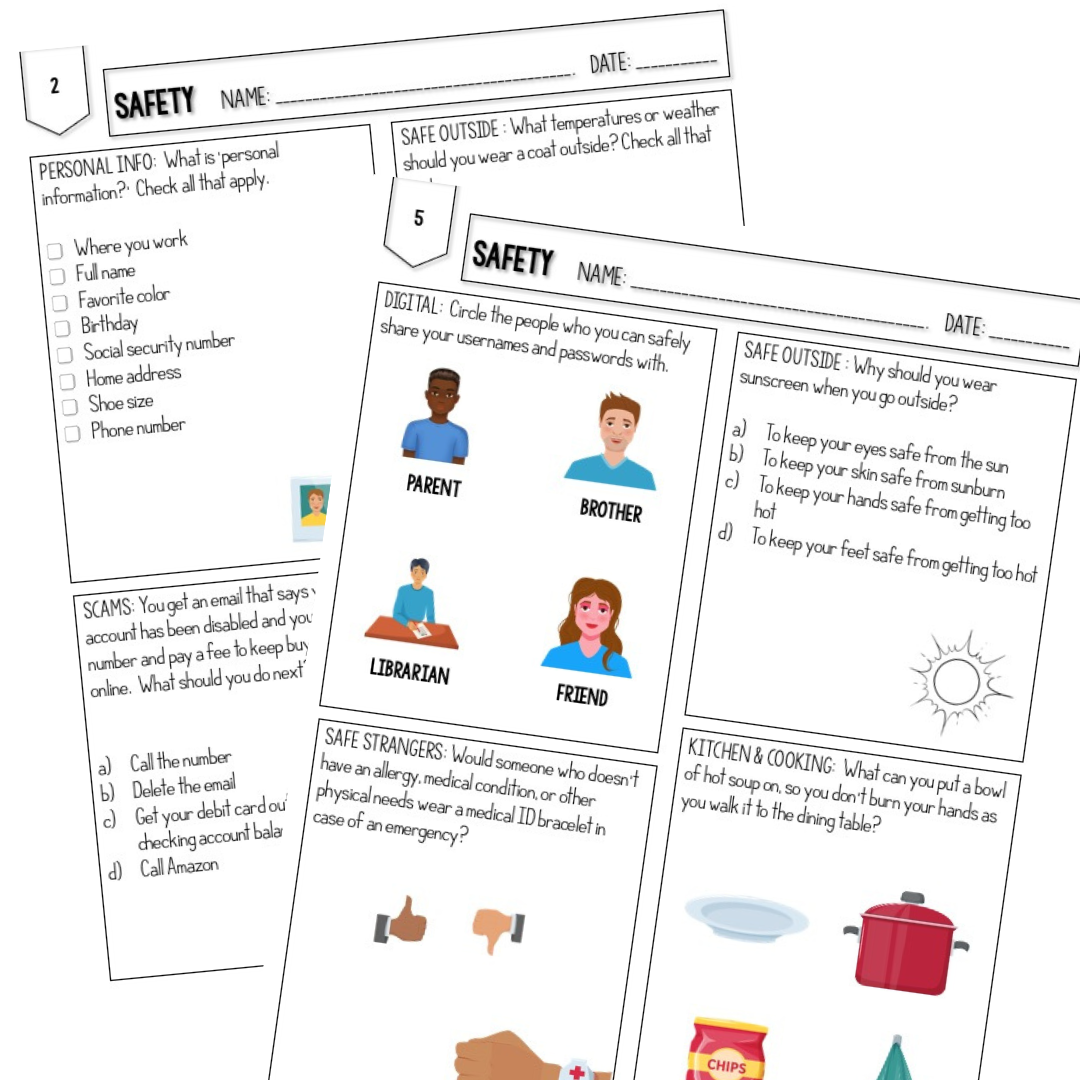
> There is a variety of question response styles on each page, including checkboxes, multiple choice, circle pictures, and thumbs up/thumbs down.
> Each page has 4 questions and the safety skill topics vary, so your student’s won’t be overwhelmed nor will it become monotonous. The 4 different topics per page is a great way to address a variety of safety awareness in a few minutes.
> There are visual answer keys and it’s NO PREP! Seriously! You just print, project, and go! A quick and meaningful answer when writing lesson plans for safety activities!
What Safety Skills are Included
When creating the categories to include in this resource I wanted it to span more than just the obvious safety topics, like cooking, being home alone, and personal information. I thought back through my experience and what the most common safety concerns I had for my students, like body privacy at the local fitness center and general community safety. I also pulled from my experience talking with families about their common safety concerns, like relationships and scam text messages.
So, this resource spans a wide range of safety topics and is most appropriate for high school and transition age students because the questions have come from my teaching experience (which we all know is so valuable to quality resources).
The full list of specific topic safety skills included in the resource:
-
Traveling
-
Scams
-
Digital/Online Safety
-
Kitchen and Cooking
-
Relationships
-
Eating
-
Safe in Weather and Outside
-
Medicine
-
Home Alone
-
Safe Strangers
-
Community
-
Personal Information
-
Privacy in Public
-
Money
-
and more!

When & How to Use It
Like most of my workbooks, this resource has 36 pages and is intended for 1 page to be used weekly (for example- Safety Thursday). If you use that structure, this resource should last a whole school year. You could also use this resource daily, and it would last you about two months if you use it as part of the students' daily routines.
Now, if you are looking for other ways to use this resource (especially if you begin using it mid-year), then consider throwing a few pages in your emergency sub folder or distance learning packet. The visual answer keys are perfect for having a substitute use or to accompany in the packet for checking answers at home.
You could also focus specifically on safety for a whole month. Safety in September has a nice ring to it! These pages would be ideal for nightly homework! Or, after students complete a page independently, choose one the of the topics to discuss, further reinforcing important concepts in an engaging way.
Lastly, you could use this to assess a student’s understanding of safety in a variety of contexts, which may help you to develop transition or independent living goals. Use specific pages to gather a baseline in an age-appropriate way.
Other Important Life Skills
If you are looking to cover more than just safety skills, check out Cooking & Kitchen Skills, Vocational Skills, and Functional Reading Comprehension Workbooks!
I strive to create meaningful, engaging, and age-appropriate life skillsresources, and this Safety Skills Worksheet Workbook is no different. I hope it generates meaningful discussion and learning in your classroom!